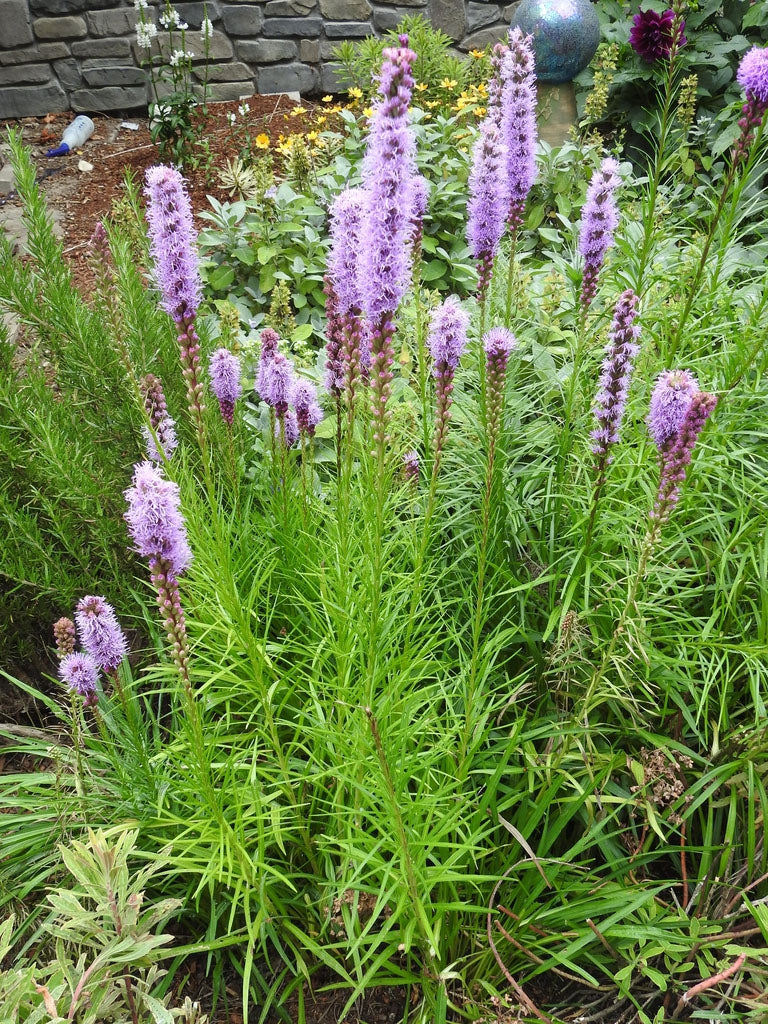
Liatris spicata (Zones 3-8) is a fantastic vertical accent for the summer garden. Unlike most plants that bloom from the bottom up, Liatris spikes (3-5' tall) bloom from the top down, ensuring a long-lasting purple display. Its fine, grass-like foliage provides a soft, structural contrast to the bold leaves of Echinacea or Rudbeckia.
The Ecological Exchange
This is a high-traffic nectar hub. The dense floral spikes are a magnet for Monarchs, Swallowtails, and a vast array of native bees and hummingbirds. Because the flowers are tightly packed, they offer a high-efficiency fuel source for migrating insects. In the fall, the seed heads are frequently visited by small songbirds. To support stem-nesting bees, avoid cutting Liatris to the ground in fall. Instead, trim stalks to 12–15 inches in late winter. This 'stubble' residue provides vital nesting cavities for native bees while new spring growth quickly hides the old stems.
Performance & Site Care
While most Liatris species crave dry desert conditions, L. spicata is uniquely adapted to the wetter, clay-heavy soils of the Southeast. It thrives in full sun and can handle moisture better than its cousins, making it perfect for rain gardens or heavier Piedmont soils. It grows from a corm (a flattened, bulb-like structure) and will naturalize over time into a stunning vertical colony. Liatris spicata takes up very little horizontal space (only about 12–15 inches wide), individual plants can look "lonely." Clusters of 3 or 5 create a much stronger architectural statement.