The Good Plant Company
Pale Coneflower
Pale Coneflower
Echinacea pallida
Mature Size: 2–4' H x 1.5–2' W
Eco-Role: Specialist Bee Forage | Avian Seed Source
Couldn't load pickup availability
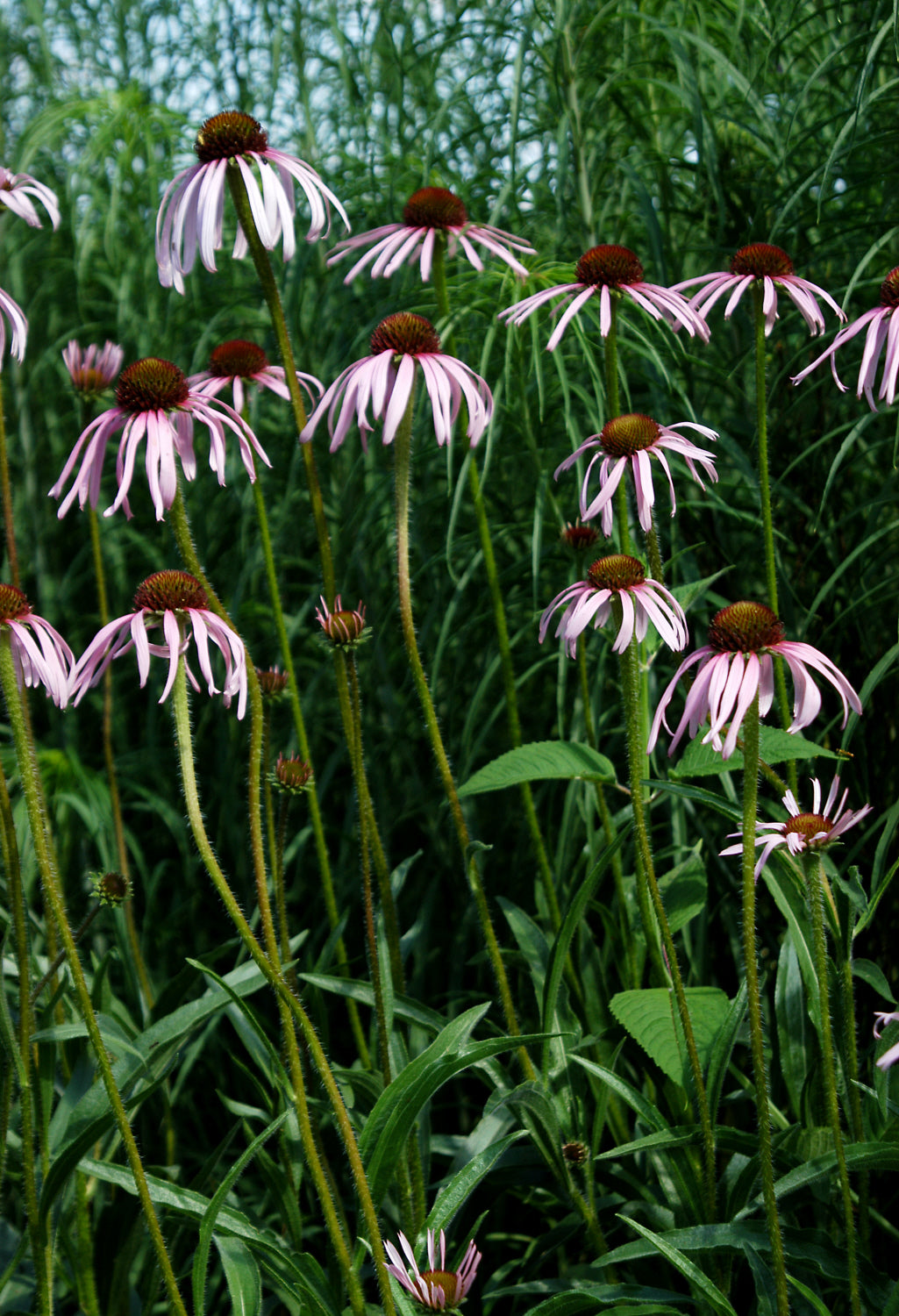
For those looking for a more little bit of the wild yet refined aesthetic, Echinacea pallida offers a distinct, slender silhouette. Characterized by long, drooping, pale-pink petals and narrow foliage, it blooms earlier than its cousin E. purpurea, helping to bridge the gap between late spring and mid-summer. It is an ideal choice for plantings where texture and movement are prioritized.
Deep-Rooted Value
E. pallida is an important nectar source for long-tongued bees and butterflies and functions as a host plant for the Silvery Checkerspot butterfly. Because it blooms in early June, it provides vital food before the mid-summer heat hits its peak. Its deep taproot—often reaching several feet into the ground—not only makes it nearly bulletproof against dry spells but also provides structural support in undisturbed landscapes. Like other coneflowers, it is a favorite for songbirds once the seeds ripen.
Performance & Site Care
This species is built for lean, tough conditions and handles rocky or sandy soils better than almost any other Echinacea. Because of its significant taproot, it does not like to be moved once planted; pick a permanent home in full sun and let it thrive. Pale Coneflower does re-seed and so we recommend deadheading post-bloom to reduce its spread. We also like to inter-plant with other deep rooted species to keep Pale Coneflower's spread in check, e.g., Panicum sp. (Switchgrass), Eryngium yuccifolium (Rattlesnake Master), etc. It is highly deer-resistant and thrives in the heat of the Piedmont, requiring almost zero supplemental water once established.
Share
