The Good Plant Company
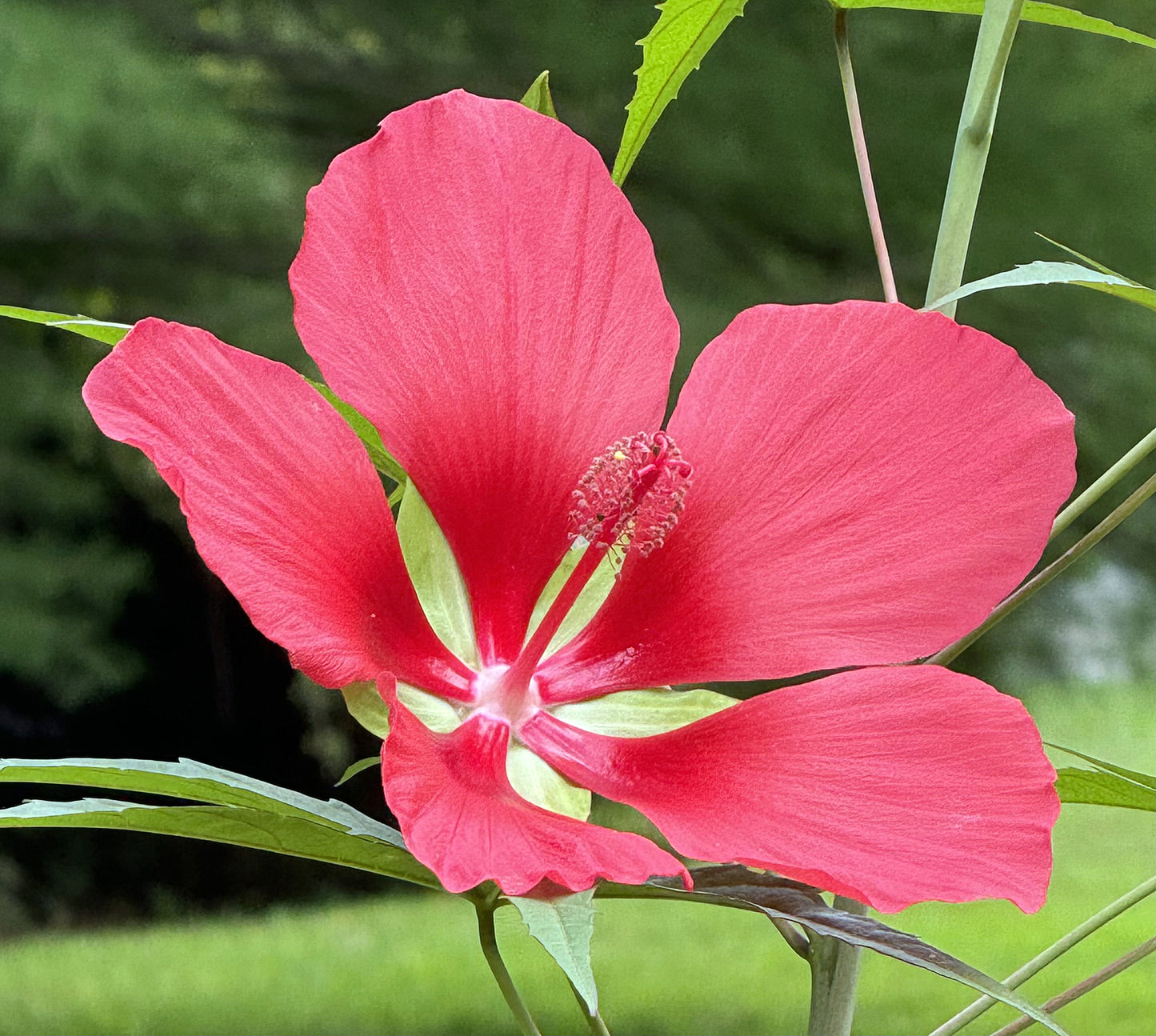
Scarlet Rose Mallow
Scarlet Rose Mallow
Hibiscus coccineus
Mature Size: 6–8' H x 3-4' W
Eco-Role: Lepidopteran Host | Specialist Bee Forage | Migratory Nectar Hub
Couldn't load pickup availability
Hibiscus coccineus (Zones 5-9) is a high-impact perennial that brings a tropical aesthetic to the Southeastern landscape without the high-maintenance requirements of non-native hybrids. It is prized for its massive, 6-inch crimson star-shaped blooms and elegant, deeply lobed foliage. While it can reach heights of 6–8 feet, it maintains an airy, "see-through" habit that provides vertical structure at the back of a border while remaining refined enough for smaller managed landscapes.
This plant is a critical pollinator resource, serving as a mandatory nectar source for the Rose-mallow Bee. Its deep red, trumpet-shaped centers act as a high-visibility beacon for Ruby-throated Hummingbirds, who rely on its mid-to-late summer bloom window for high-energy forage. It is a verified host for the Gray Hairstreak and Painted Lady butterflies, along with the Common Checkered Skipper and specialized moths like the Delightful Bird-Dropping Moth. Once the blooms fade, the woody stalks and ornamental seed pods remain upright, providing architectural interest and perching sites for songbirds throughout the winter months.
Performance & Site Care
A true native workhorse of the Southeast, Hibiscus coccineus thrives in the hot and humid summer conditions of the NC Piedmont. While it is a natural fit for pond edges or rain gardens, it is remarkably adaptable to average garden soil as long as it isn't allowed to fully dry out, making it a premier choice for rain gardens or low-lying spots where water tends to settle. It performs best in full sun to ensure strong stems and the most prolific blooming. Pinching the stems back by half in early June will encourage a bushier, multi-branched habit and maintain a lower, more compact profile without sacrificing blooms. Though a vigorous grower, it stays in a polite, upright clump and does not spread aggressively. In late winter, cut the stems back to 12–24"; this creates essential nesting "apartments" for native stem-nesting bees while making way for the rapid new growth of spring.
Share